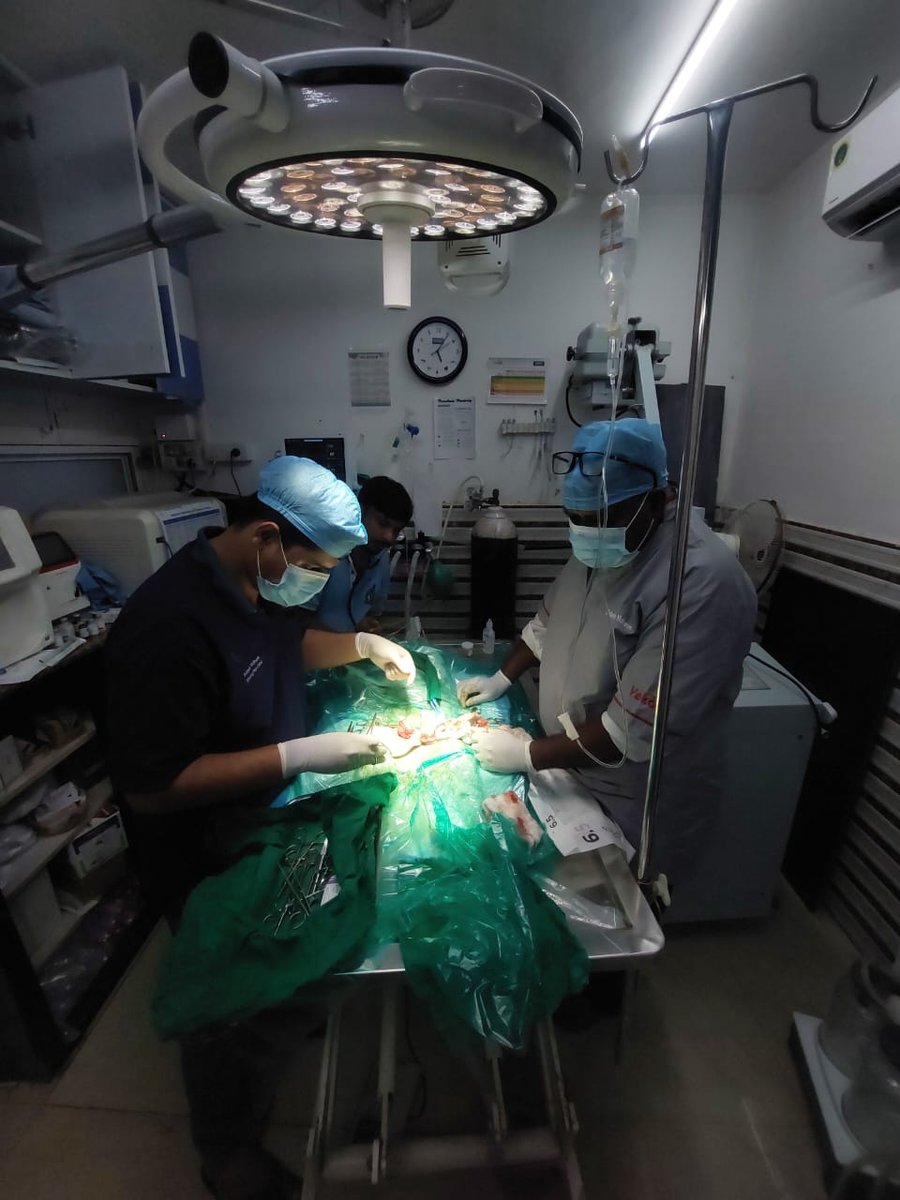
Procedures Under This Category
- Wound repair and reconstruction following injury or dog fights
- Hernia correction (umbilical, inguinal, perineal)
- Cherry eye and eyelid surgery
- Abscess drainage and surgical cleaning
- Anal gland surgery for recurring impaction
- Bladder and abdominal organ procedures
Why Quick Evaluation Matters
Soft tissue injuries can look minor on the surface but involve deeper damage that's only clear on examination. A small skin tear might need only cleaning and stitches; a deeper wound near the abdomen needs imaging to rule out internal injury before we proceed. We assess every case individually rather than applying a one-size-fits-all approach.
Anaesthesia & Recovery
Most soft tissue procedures are done under general gas anaesthesia for patient comfort and surgical precision, with local/sedation options for minor cases where appropriate. Recovery time varies by procedure — we'll give you a specific timeline and aftercare plan for your pet's exact surgery.
Common Signs to Watch For
Open wound that won't stop bleeding or oozes
Visible bulge near the belly button or groin (possible hernia)
Red, swollen lump near the eye
Persistent licking or scooting near the tail base
Foul-smelling discharge from a swollen area (possible abscess)
Frequently Asked Questions
My dog has a hernia — is this urgent?
Some hernias are stable and can be scheduled; others (especially if the bulge becomes hard, painful, or discolored) need same-day attention since tissue can become trapped. Call us and describe what you're seeing and we'll advise.
Will a wound need stitches or can it heal on its own?
Depends on depth and location — we'll examine and tell you honestly whether it needs surgical closure or will heal fine with cleaning and bandaging.
What is cherry eye and does my dog need surgery?
Cherry eye is a prolapsed gland in the third eyelid, common in certain breeds. It usually requires a minor surgical repositioning procedure rather than removal, to preserve normal tear production.